


The first recorded theater in Europe, the ancient Greek amphitheater, dates back to around 600 BC. However, theater as an art form traces its roots back as far as 8500 B.C. to tribal dances and religious rituals. Undoubtedly, theater has always been a significant part of public life. Learn more about how it began and evolved in Texas at houston-trend.com.
INDIAN AND COLONIST PERFORMANCES
For centuries before the advent of English-language theater in Texas, Indians performed sacred rituals that included elements of dance, vibrant dress and intriguing reincarnations.
The Spanish colonists, at the same time, staged secular dramas on special occasions, presented religious spectacles, and cultivated performances that combined folk dance and Christian theater. The latter type of performances later evolved into Spanish-language folk dramas, which were performed in Texas communities annually beginning in the nineteenth century.
THE EMERGENCE OF PROFESSIONAL THEATER
The first English-language theater in Colombia was mentioned in American publications in 1836. Competing managers John Carlos and Henri Corry established two theaters even before the city had its first church. Professional actors from New Orleans played the main parts, while amateurs played the minor ones. In addition to offering a variety of entertainment, theaters presented serious plays and musical concerts.
During the Mexican-American War, actors, including legendary comedian Joseph Jefferson, performed for the United States troops in Corpus Christi, Texas and the Rio Grande Valley.
Between 1845 and 1860, professional theater became a major entertainment in Texas, particularly on the Gulf Coast. The port city of Galveston gained particular popularity among tourists. Small inland towns made do with amateur dramatic societies and traveling entertainers. During this period, Texans wrote several original plays, several of which were about the Texas War of Independence.
For a while, the Civil War and Reconstruction in the South suspended the rise of Texas theater. Nevertheless, as early as the 1870s, railroads opened to tourists. Stock company executives, including actor William Henry Crisp, had opened theaters in Galveston, Houston and San Antonio.
Texans built dozens of opera houses, of which some had complete stage change equipment and ancillary facilities. The theaters provided separate sections for blacks and all women. By the late 1880s, Texas had joined the transcontinental theater. The state has hosted such celebrities as Edwin Forrest, Edwin Booth, Sarah Bernhardt, Helena Modjesko and Lillie Langtry. Actors rode in specialized railroad cars around the state, stopping every 30 to 60 miles.
Melodramas, Shakespeare plays, minstrel shows (performances in which white players recreated humorous incidents from black people’s lives) and musical extravaganzas were all part of the regular theater program. Vaudeville and variety shows were added to the rest in the 1890s.
In 1894, the Grand 1894 Opera House was built in Galveston. It and other major opera houses used the latest theatrical technology and created lavish sceneries for touring artists from New York, Chicago and other large-scale cultural centers.
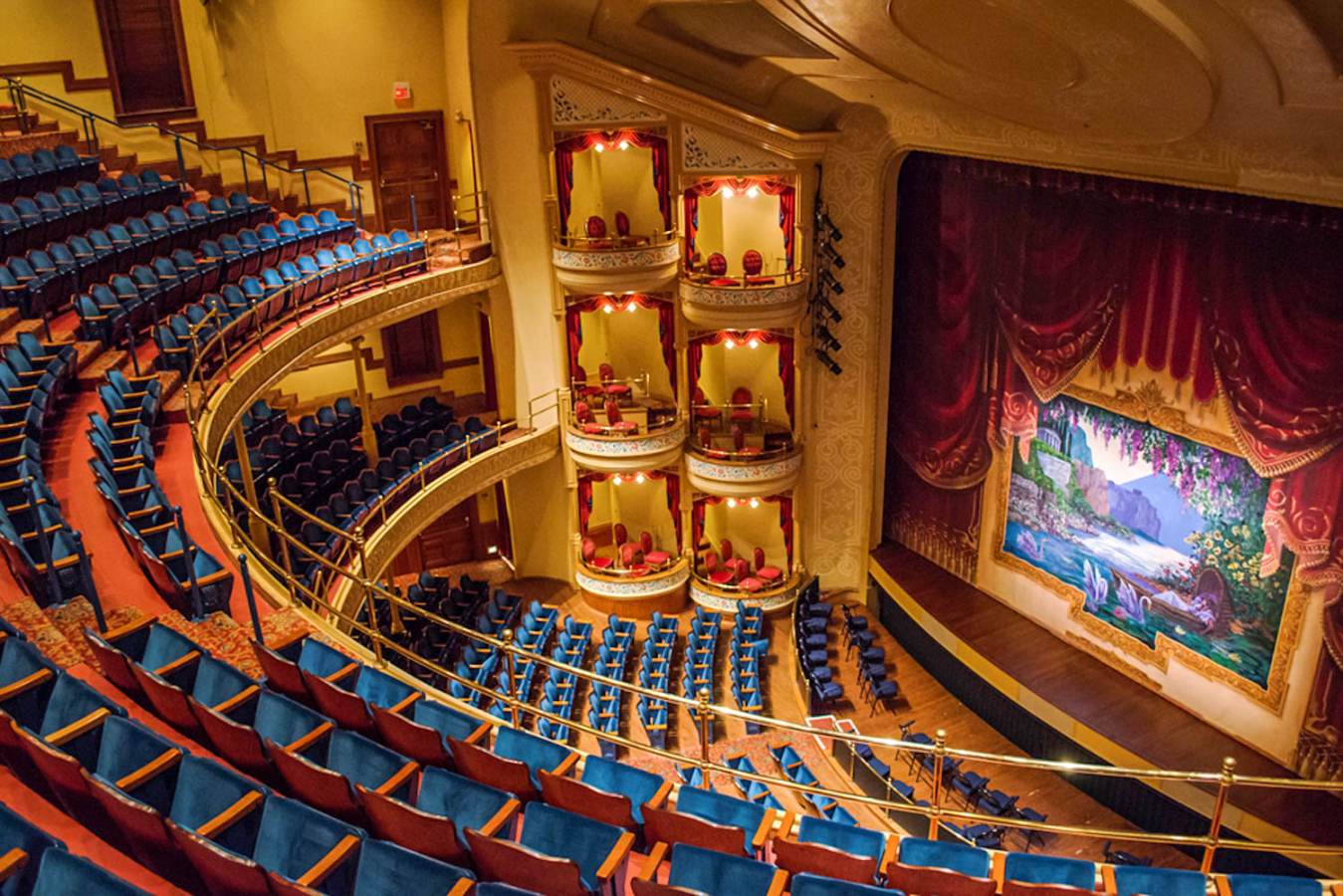
THE DEVELOPMENT OF AMATEUR THEATER
After 1905, theaters were actively offering films as their novelties. Seeing the prospect, entrepreneur Karl Hoblitzelle built several large theaters in the state, alternating showing films, vaudeville, or plays. Gradually, films began to supplant commercial performances. The only exception was the Spanish-speaking companies that relocated to South Texas following the Mexican Revolution and continued to tour into the 1930s.
When touring declined significantly in the early twentieth century, more educated and urbanized Texans turned to amateur theater as part of the idealistic movement of cultural improvement. In 1907, playwright Stark Young organized a drama society called the Curtain Club at the University of Texas at Austin. Similar drama clubs quickly sprouted up at other universities throughout the state. By the 1920s, dozens of Texas cities and towns sustained their small amateur theaters.
Some Texas high schools started drama programs around 1927. The University of Texas at Austin established the first theater department in the state in 1938.
Throughout the Great Depression, commercial tours were held only in the major cities, while residents of smaller towns enjoyed the musical entertainment given by tent shows.
TWO THEATER LEADERS
On October 7, 1945, drama teacher Nina Vance founded Alley Theatre, a professional theater company in Houston. It is the state’s oldest professional theater company. Each year, the company performs up to 16 plays, ranging from the finest works of the classics to restored neglected pieces and new creations by contemporary playwrights. Alley Theater attracts a variety of theater workers, including actors, designers, composers and playwrights, who all work as guest artists on particular performances throughout each season.
During the 1940s and 1950s, pioneering educator Dr. Paul Baker, working at Baylor University (Waco, Texas), refined the theater curriculum. Later in his career, he directed a theater company at the Dallas Theater Center that staged classic, contemporary and new plays.
In the 1960s, the Alley Theatre and Dallas Theater Center established themselves as the state’s theatrical leaders. They featured the works by Texas playwrights Preston Jones, Horton Foote and L. Ramsey Yelvington, as well as American and European classic plays.
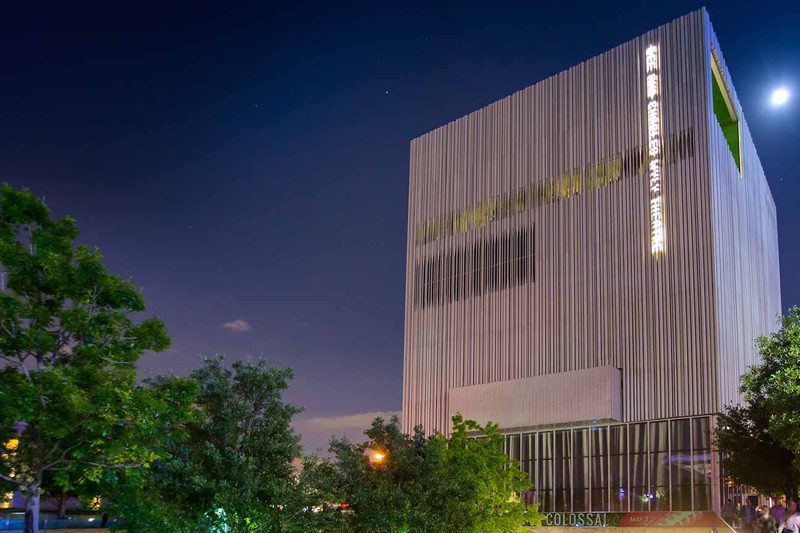
With Ford Foundation grants, Alley Theatre Company built a large state-of-the-art theater in downtown Houston that opened its doors in 1968. The new theater complex on Texas Avenue houses two stages, the Hubbard Stage (774 seats) and the more intimate Neuhaus Stage (296 seats), several administrative offices, rooms for sets, props, costumes and a rehearsal hall.
NEW THEATER FORMS
In the 1970s, a new form of commercial theater emerged in Texas. The suburbs began hosting theater nights that featured mostly comedies and plenty of food. In the 1980s, open-air performances grew in frequency. For example, they were hosted every summer in the picturesque Palo Duro Canyon State Park.
Also, in the 1970s, community leaders recognized the value of historic theaters and renovated some facilities in Dallas, San Antonio, Austin, Galveston and other cities. Following several failed attempts in the 1960s, a flourishing underground theater emerged in metropolitan areas in the late 1970s. At that time, African American and Latino theater companies sprang up in Houston, Dallas, Fort Worth and Austin.
The early 1990s have seen the rise of professional theater. Zachary Scott Theater took the lead in Austin, Theatre Three in Dallas, Stages in Houston and Stage West in Fort Worth. Houston also became home to a professional theater company, A. D. Players, to create wholesome family entertainment. Dallas Children’s Theatre in Dallas has become the most prominent producer of performances for young people in the state. One of the most unusual theater facilities in the country was the Addison Conference and Theatre Center, a new conference hall and theater at the same time.