


Modern movie theaters are becoming more and more like Christmas trees, shimmering with thousands of beckoning lights, attracting both children and adults. They all vary from each other by name and the characteristic colors of the network, but they have a lot in common. First and foremost, it’s worth recalling that distinct smell of popcorn and pastries that race to greet visitors, followed by the rest mentioned earlier. Learn more at houston-trend.
Every sensible person understands that in today’s world, movie theaters are a business where only the finest survive, just like anywhere else. But perhaps that’s where a person finds themselves transported to a somewhat different reality. It might be due to the noise insulation or soothing colors inherent in movie theaters or because of watching your favorite movie on a big screen that, back in the day, only the wealthy could afford.
A voyage back to early twentieth-century Houston and the community of Neartown, where the city’s first movie theater, River Oaks Theater, was located, awaits us. So grab your packs, grab some popcorn and pastries, make yourselves comfortable and have a nice trip.
THE FIRST BRICKS AND VISITORS
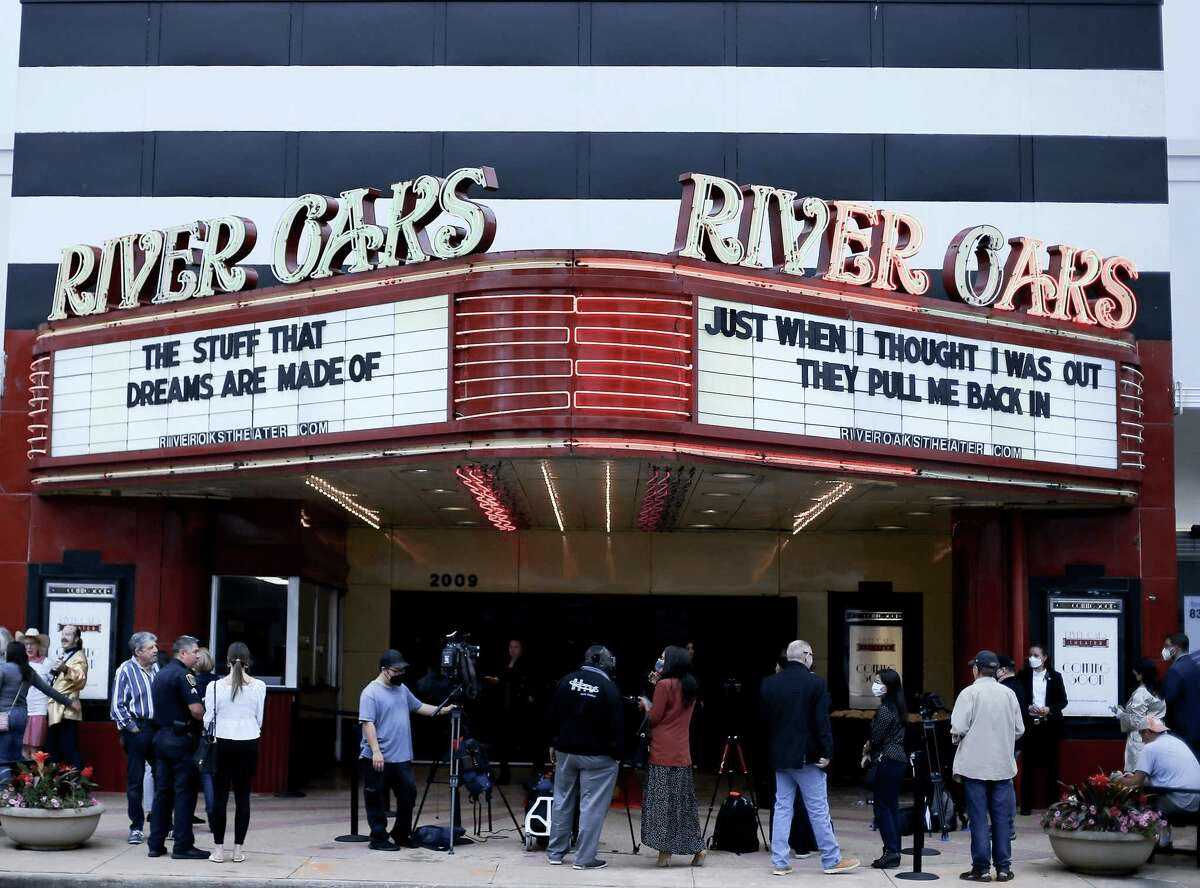
An undeniable historical highlight of Houston was the first movie theater built in 1939 in the Art Deco style inherent in those times. At first, the building was owned by tenant Paul Scott. It’s worth adding that the hero of our story was part of the Interstate Theatre Corporation family of movie theaters.
On November 28 of that year, the theater welcomed its visitors. On that historic day, it screened Bachelor Mother, a film directed by Charles Hutchinson in 1932. Eight years later, the Interstate Theater Corporation ultimately welcomed River Oaks into its family after the final acquisition of the theater.
TO BE CONTINUED
In the 1970s, the theater already belonged to other good people who changed the vector of the media product offered to viewers. Art house films, cult and foreign films, as well as classic and alternative films, those very vectors were taken as a direction by the movie theater management. At that time, our hero belonged to Landmark Theatres Corporation.
Between 1982 and 1985, things were not going well for the movie theater. The reason for that was the product offered by the theater to its viewers, though everything comes to an end eventually. The terrorist organization Ku Klux Klan was involved in the conflicts, emphasizing their gravity.
After these events, the movie theater felt the meaning of the words ‘reconstruction’ and ‘repair’ for the first time since its opening. For the hefty cost of nearly half a million dollars, the number of seats in the cinema was reduced to 546, while a powerful new projector was installed instead of the demounted ones. But we have to agree here that, even by modern standards, this number of seats is impressive.
The new highlight opened its doors to audiences on May 15, 1986 and delighted visitors with its service until 2012. That year, however, a new batch of renovations awaited the movie theater. This time, the owners decided to place primary emphasis on the equipment as the 21st century demanded a transition to digital technology.
The movie theater building is located on the east side of the River Oaks community. The River Oaks Theatre itself has one large one on the first floor and two somewhat smaller ones on the second floor, projection screens and state-of-the-art service. It’s worth noting that its nearly century-long history can certainly serve as an inspiration to others.
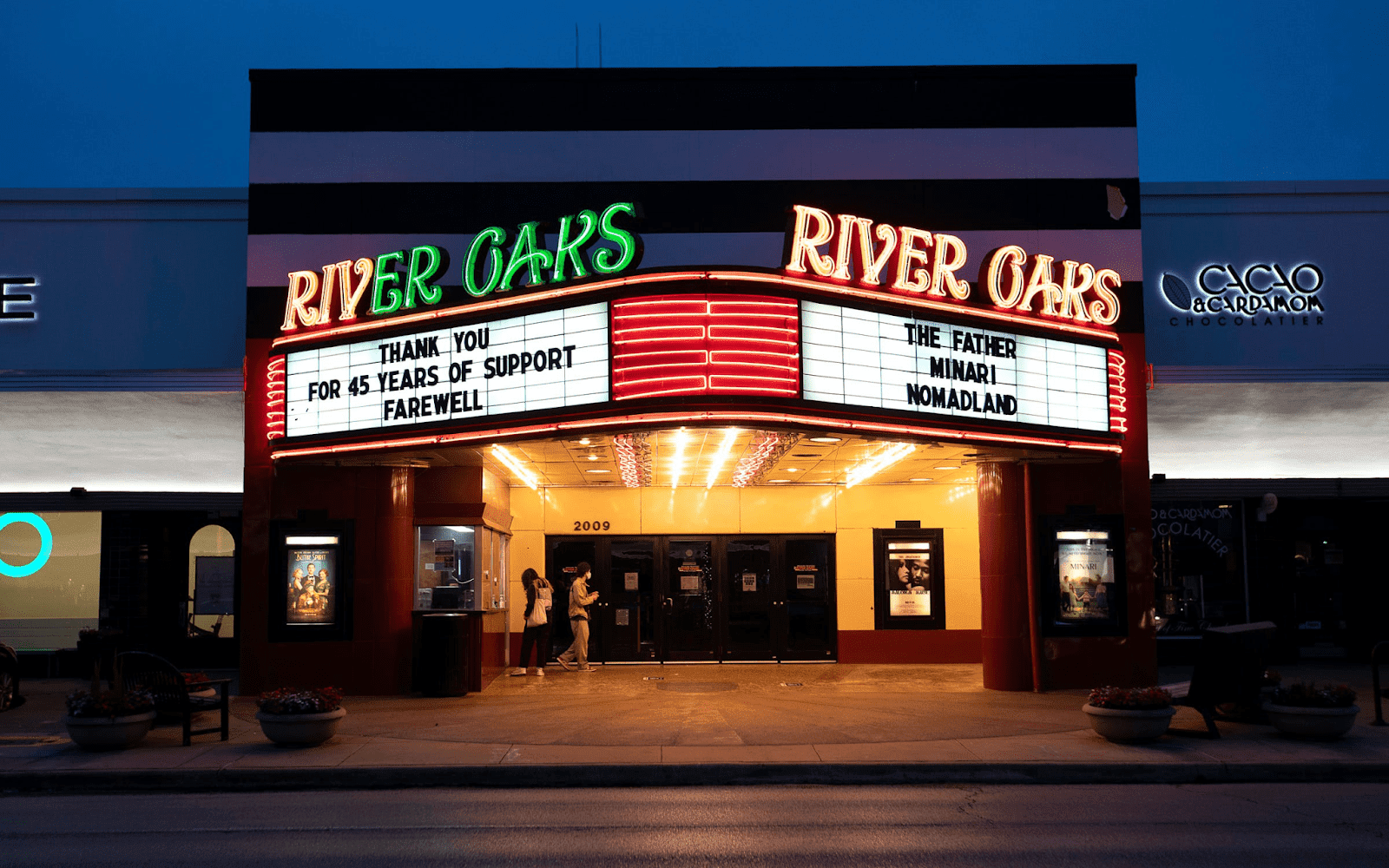
The Houston landmark closed its doors in 2021 when the lease expired. After a complete renovation, the historic movie theater is scheduled to reopen by the end of this year.