Houston is traditionally known as the global capital for energy and space exploration. Historically, it’s been a place where innovation always thrives. But how have these powerful industries—oil and space—actually shaped the world of cinema? In this article, we’ll reveal how Houston’s technological advancements and unique spirit didn’t just mold reality; they also inspired filmmakers, leading to unforgettable stories on the big screen. From epic space odysseys to intense oil industry dramas, we’ll explore on houston-trend how Houston’s innovations became an integral part of moviemaking.

Oil and the Art of Cinema
At first glance, they might seem like two completely opposite ideas. Yet, the connection between them is far more significant than it appears. Let’s dig into why.
Oil – The Burning Film
Here’s an interesting fact, not widely known: in the early 20th century, oil wasn’t just an energy source; it was also a raw material for film. Most film stock used until the 1950s was based on cellulose nitrate, a byproduct of petrochemicals. This film was extremely flammable. And, surprisingly, this danger paradoxically shaped the very style of filmmaking: fewer takes, more intense actor concentration, and raw, unembellished shots.
But Houston’s oil spirit wasn’t just in the material used for film. Its atmosphere seeped into movie plots as well. A prime example is the crime drama The Houston Story, released in 1956. The plot follows a protagonist desperate for quick cash. Since earning the needed sum honestly would take too long, he decides to swindle wealthy oilmen. In this movie, oil became a symbol of greed, scams, and downfall. Here, black gold isn’t just a backdrop; it’s the driving force behind events, a source of evil, and a temptation that dims morality.
An Economic Base for Filmmaking
Another factor linking oil with the art of moviemaking was Houston’s oil sector, which created the economic conditions for the city’s growth, and in turn, for its cultural initiatives. As early as the mid-20th century, funding for local theaters, studios, and even advertising film companies came not only from government or community funds but also from private investors in the oil business. Instead of traditional philanthropy, they invested in cinema. For the most part, these oil magnates weren’t entirely altruistic. This was their way of getting self-promotion, shaping their public image, and wielding influence.
Technological Infrastructure
Equally crucial for the film industry’s growth were the technical capabilities born from oil extraction. Thanks to the energy sector, Houston had early access to advanced materials and technical equipment. This extended directly to moviemaking. Think special effects, lighting systems, generators, and mobile shooting stages. In the 1960s and 70s, production companies emerged in the region that could independently support films on location, precisely because of the technical know-how tied to oil projects.
Oilmen – Unofficial Producers
Here’s another fascinating tidbit: some films connected to Houston were made with the direct or indirect help of oil companies. Sometimes through sponsorship, other times as a corporate commission. There are documented cases where films were shot right at industrial sites or near drilling rigs, even bringing in actual personnel for crowd scenes. This wasn’t just PR; it was also an attempt to cement the image of oil as a romantic symbol of technical progress.
Oil in the Cultural Frame
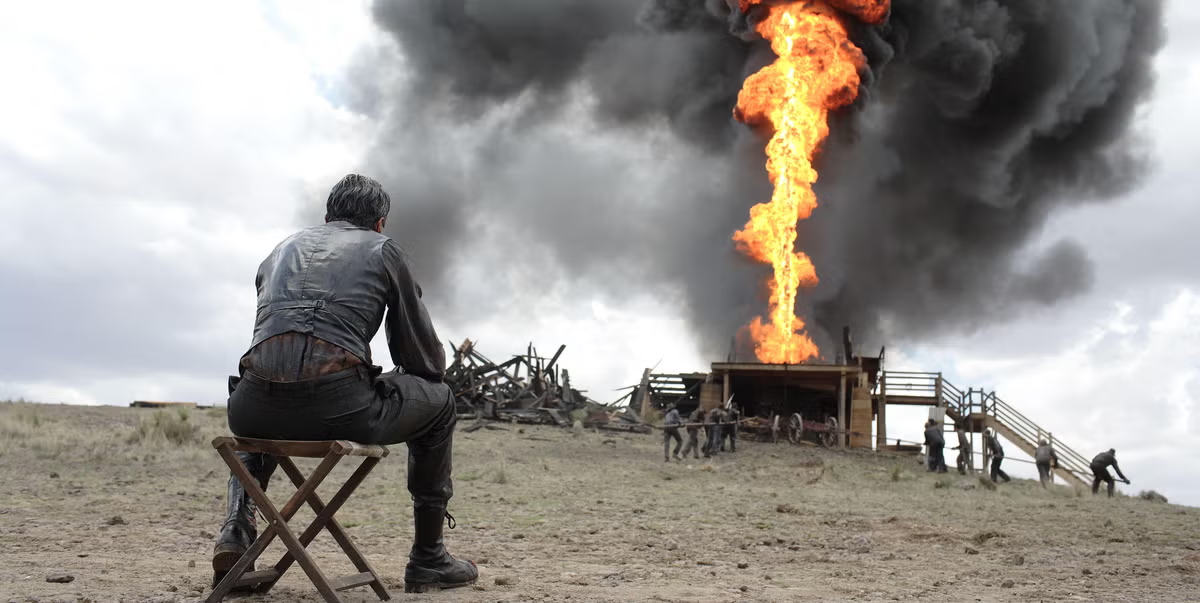
The film Hellfighters (1968), starring John Wayne, is a vivid example of how the realities of oil transform into an epic. The film’s heroes are firefighters battling blazes on oil rigs. Wayne himself played a character based on a real Texas oil well firefighter. Many scenes were inspired by or directly filmed in Texas, including Houston, which only deepened the city’s connection to oil and cinema.
As we can see, oil innovations provided the infrastructure, financing, and symbolic groundwork that allowed Houston to appear on screen not just as a location, but as energy, style, and myth. And in every black-and-white frame, where the outlines of drilling rigs or the faces of exhausted heroes emerge, there’s a bit of oil… and a bit of Houston.
“Houston, We Have a Movie”: NASA’s Space Programs and Cinema
The 1960s transformed Houston into a hub for space development. The establishment of NASA’s Mission Control Center fundamentally changed both the city and how it was seen in movies. Areas once associated with cowboys and oil pipelines suddenly became laboratories of the future and pathways for science fiction. And while Houston rarely took on a “starring role” in films, its industrial landscape and urban logic definitely influenced the visuals of 70s and 80s science fiction.
Space as Cinema: How NASA Shaped a New Visual Language
The newly created NASA space center didn’t just coordinate flights; it also forged a new cultural mythology. For Hollywood, this was a goldmine. Now, science fiction could be grounded in real locations, scientific data, and access to unique technologies. Films about space began to lean on technical reality, not just pure imagination. And Houston, as the place where space “talks” to Earth, became a genuine movie location.
“Apollo 13”: A Docudrama with Real Roots
The most famous film project about space and Houston is, without a doubt, Apollo 13 (1995), directed by Ron Howard. The movie recreates the events of a real 1970 mission where the crew nearly died, and communication with Mission Control in Houston was absolutely vital. It was from here that the iconic phrase: “Houston, we have a problem” originated. The film accurately portrays not just NASA’s interiors but also the atmosphere of 1970s Houston—an era when science became gripping drama, and filmmakers captured not fantasy, but a real fight for survival.
Houston as a Tech Hub for Special Effects
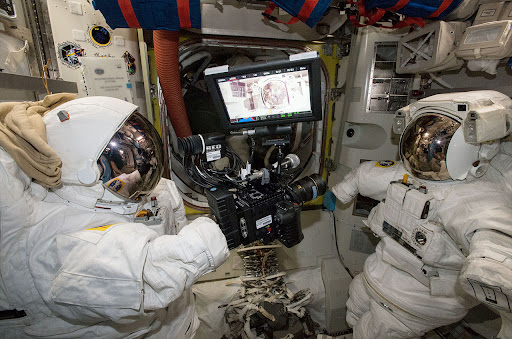
Thanks to NASA’s presence, Houston had the infrastructure that was invaluable for shooting films and documentaries about space. Technologies, models, and simulators were tested here, giving film crews access to real modules, flight simulators, and authentic astronaut suits. This allowed for the filming of incredibly realistic scenes without relying on excessive special effects.
Space innovations, including computing systems, micro-cameras, and stabilization systems, eventually crossed over into commercial cinema. Some technologies initially developed for NASA later became industry standards in filmmaking. Lightweight cameras used in zero-gravity simulators are a great example.
Houston as an Educational Location
Throughout the 1980s and 90s, the Johnson Space Center was the filming location for numerous popular science films. These weren’t just shown on channels like Discovery or National Geographic; they were also broadcast on major American television networks. Houston appears here as a city that doesn’t just see space on screen, but lives alongside it—through the families of astronauts, engineers, operators, and everyone who worked on every mission.
To Wrap Things Up
Houston in cinema is always more than just a city. It’s a metaphor for the depth of oil, technical excellence, the dream of the sky, and the life-changing risks involved. It always holds a hidden potential: to explode, to ignite, to rise above the surface. And that’s exactly what makes it a crucial, though perhaps underestimated, figure in cinematic history. Here, the real and the imagined truly merge, where science gives cinema not only its subject but also its truth. Oil programs transformed the city into a source of not just innovation and artistic patronage, but also cinematic inspiration. Meanwhile, space projects didn’t just create a backdrop for fantastic journeys; they also provided compelling, real-life plots for films.