


The well-known Houston rock band Blue October has been named one of the top 40 alternative rock artists. Their compositions are lyrical and melodic, furthermore, they even capture the attention of those who are not fans of this genre. In addition, they are quite creative and dedicated. The band has released 14 studio albums and several platinum-selling tracks. Find more information on the group’s development at houston-trend.
School friendship, a fateful necklace and a new band member
Blue October was formed in 1995 by two friends, Justin Furstenfeld and Ryan Delahoussaye. The two men had been close friends since high school. They began their musical career with the band Harvest. Justin was the lead singer and guitarist, while Ryan played mandolin and violin and performed back vocals. Performing in Harvest was more of a hobby than a source of income. Thus, the young men worked part-time at local pubs and restaurants. Once, Ryan happened to meet Elizabeth Rapstein Phillips in a restaurant. During their conversation, the guy saw a drum-tuning key on the girl’s necklace. The girl admitted that she had a drum kit at home and also tried to play different instruments. Ryan suggested to play together. So they built a friendship, and Elizabeth, commonly referred to as Liz, eventually became a full-fledged member of the band, playing bass guitar.
The newly formed group had rehearsals in Liz’s basement. One day, Justin Furstenfeld’s older brother, Jeremy, came over to listen to their new music. There was a drum kit in the basement, but nobody played it. Justin playfully suggested that his brother join the practice despite the fact that he had never played the drums before. Jeremy accepted the challenge and, surprisingly, performed well for the first time. The band then became a quartet under the new name RoDan Entertainment and soon played their first concert in Houston.
Moving, band rotations and the debut album
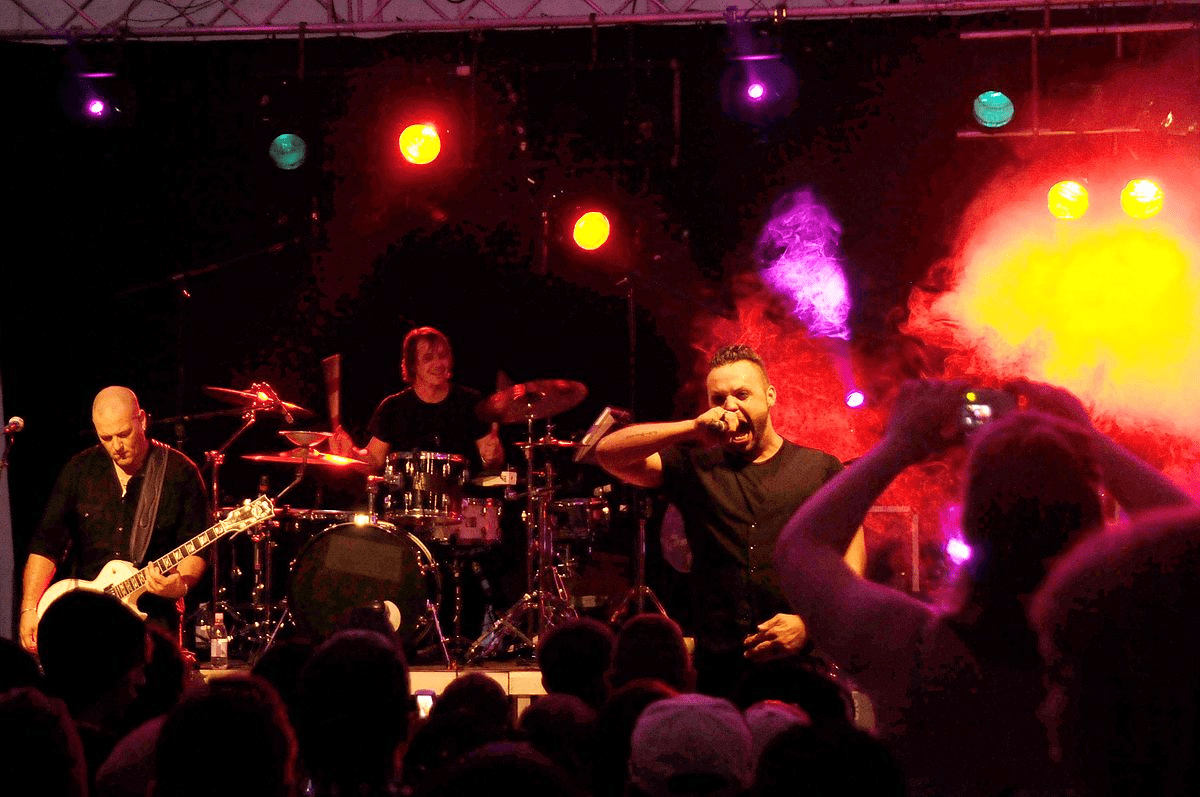
Following their successful debut, Jeremy offered the band to move to his town. At the time, he lived in San Marcos. The offer was accepted by the aspiring band’s members, with the exception of Liz, who could not leave Houston. After losing their bass player, the young men began looking for a replacement for her. After several tryouts and joint rehearsals with applicants, she was replaced by Matt Noveskey. There was also a need for another guitarist because Justin Furstenfeld could not handle the solo load and guitar playing. They found Brant Coulter, although, he stayed only for a short period of time.
The parents of the Furstenfeld brothers managed the band’s production and other issues that did not relate to creativity. Their efforts resulted in the release of the debut album “The Answers” in 1998. Furthermore, as a result of well-planned advertising, the band performed live on ABC’s KTRK-TV during rush hour. A large number of Houston residents were able to see their performance, therefore it was not unexpected that the first record became an instant success. Over 5,000 copies were sold in the city alone.
The band caught the attention not only of music enthusiasts. Music manager Michael Rand became interested in their work. He offered to work with them, and following the consent of the group members, Blue October immediately booked as many as 350 performances without selecting a date. This demonstrated that the sound producer recognized the enormous potential of young, creative musicians. This cooperation had a significant impact on the band’s future development. The new patron managed to popularize the band and contribute to their worldwide fame. This was made possible by his acquaintance with Universal Music Group CEO Doug Morris. Blue October got a record deal with Universal Records and began touring and recording their second album, “Consent to Treatment”.
Rapid rise
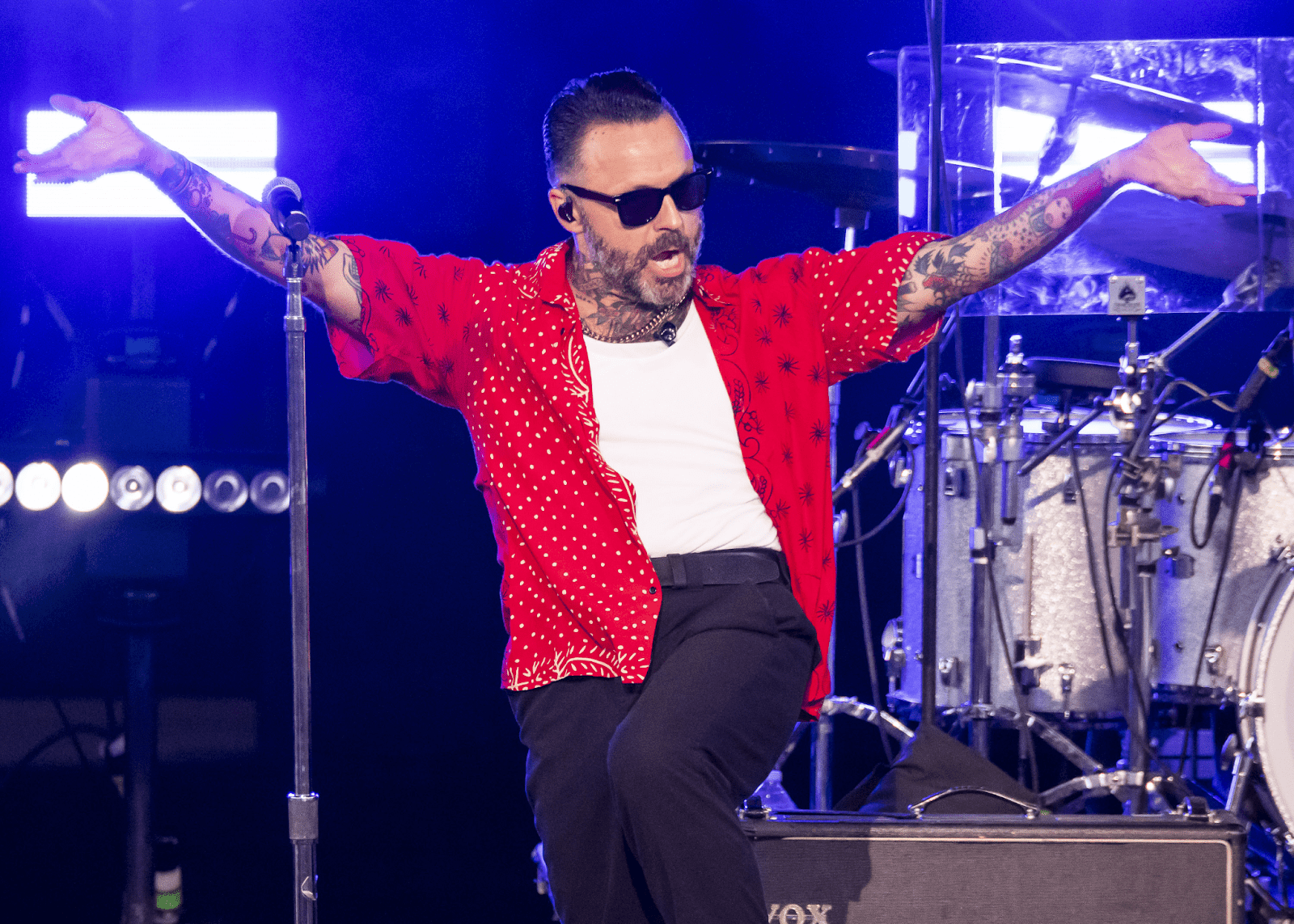
The band’s popularity grew, and concert tickets sold like hotcakes. Blue October fan clubs began to form across the country. However, where there is success, there is money. Financial issues led to a conflict between the band and Universal Records. The musicians decided to change their production company. The band’s new supervisor was a Texas-based company, Rainmaker Artists. However, this cooperation resulted in the departure of guitarist Matt Noveskey, who, for personal reasons, did not want to work under the banner of this company.
Despite the obstacles, Blue October was able to endure this challenging period for the band and even produce their third album called “History for Sale”. The song “Calling You” from the album became the band’s trademark. It was first played on the radio in March 2003. It immediately gained popularity and became popular across the country. According to statistics, the song “Calling You” was played 56,585 times during its one-month rotation on US radio waves. It was a phenomenal success.
The Rainmaker company then took the band to New York. Several performances were quickly organized there, and in early May, the band performed grand concerts. There were three such shows per week, and the band, having tasted the glory, did not get tired.
Then, there have been tours, conferences and interviews. The boy band was at the height of its popularity and success. The repertoire was sufficient to do two-hour concerts. As a result, their creative work was not replenished with new tracks in the following three years. Then, in 2006, as the opening act for the world-famous group Rolling Stones, the band presented their new release “Hate Me”. The single immediately rose to the top of the charts, surpassing even the song “Calling You”. It remained in the top five of the Modern Rock chart for 20 weeks. The song went platinum.

Discography review
In 2007, the fourth album “Foiled” was released, and it also went platinum. About one and a half million copies have been sold in the United States alone. At this time, Blue October started its global tour.
On March 24, 2009, the band’s fifth studio album, “Approaching Normal”, was released. The concert at the album’s presentation in Pittsburgh was canceled owing to hall overcrowding. In order not to disappoint fans, the band performed a mini-set right on the street.
The album “Any Man in America” premiered on August 16, 2011. In 2013, the band released their seventh album, which included a DVD compilation of their live performances. In 2016, the shortest eighth album, “Home”, with 11 tracks, was published. On August 7, 2018, Blue October released their ninth studio album, “I Hope You’re Happy”.
On October 23, 2020, the band released their tenth anniversary album. The band announced a US tour in support of their new album, but it had to be canceled owing to the coronavirus pandemic.
Favorable effects of COVID epidemic: a triple album
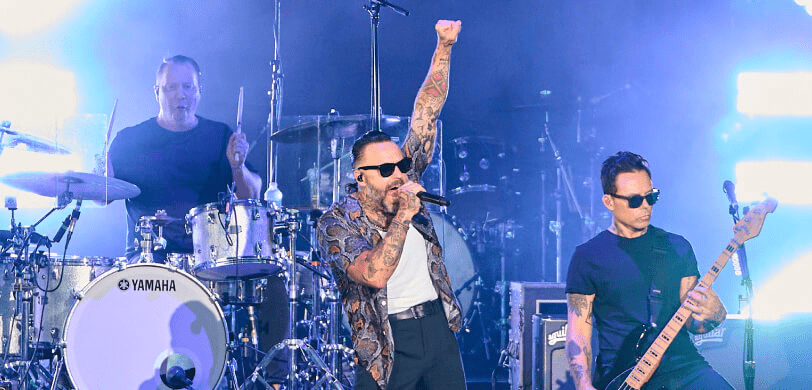
The band, accustomed to the audience’s continual interest, was forced to sit within four walls. It’s difficult to imagine how musicians felt. This did, however, provide them with a kind of vacation. However, sitting idly by is not about Blue October. During the quarantine period, Justin Furstenfeld wrote material for two full-fledged albums, which were presented to admirers of the band’s music in 2022 and 2023. During this time, the musicians remixed their earlier hits, creating a remix album. Thus, Blue October released as many as three albums during the pandemic.
In the summer of 2024, Justin Furstenfeld announced a new album but did not reveal the name. Instead, he showed the cover layout and introduced a new song called “Everything We Lost in the Fire,” which will serve as the title track.
Creative accomplishments of the group
In 2025, Blue October will celebrate its 30th anniversary. With 30 years of creative experience on stage, the band has enough to brag about. Twenty songs made the top ten, with many staying at number one for a lengthy period of time. “Hate Me” and “Into the Ocean” have gone platinum. Furthermore, very few bands can boast as many as 14 full-fledged studio albums.