In the world of blues, some names have become legends. But few are as closely tied to one city as Samuel “Lightnin'” Hopkins is to Houston. He wasn’t just a musician who played melancholic tunes; he was the living embodiment of Texas blues, its voice and its soul. His art was a chronicle of life as a Black worker in the American South—a story of hard labor, unrequited love, poverty, and moments of joy. Throughout his long life, Lightnin’ Hopkins created a vast discography that remains a standard for authentic blues even today. We’ll explore the work of this extraordinary artist further on houston-trend.
The Birth of a Legend
Samuel John Hopkins was born on March 15, 1912, in the rural community of Central Point, Texas. His musical journey began at a very early age. By eight years old, he had already mastered a guitar he built himself. His teacher was one of the most influential blues musicians of his time, the blind pianist Blind Lemon Jefferson, whom he met at a country picnic. It was from Jefferson that the young musician adopted a style that seamlessly blended his guitar and vocals.
In the 1920s and ’30s, Samuel traveled extensively throughout Texas, playing on street corners, in bars, and at country parties, honing his craft. During this time, he often performed with his cousin, the blues musician Elton “Smiley” Hopkins. This experience laid the groundwork for his unique style, which combined elements of country blues, gospel, and folk.
The Path to Recognition
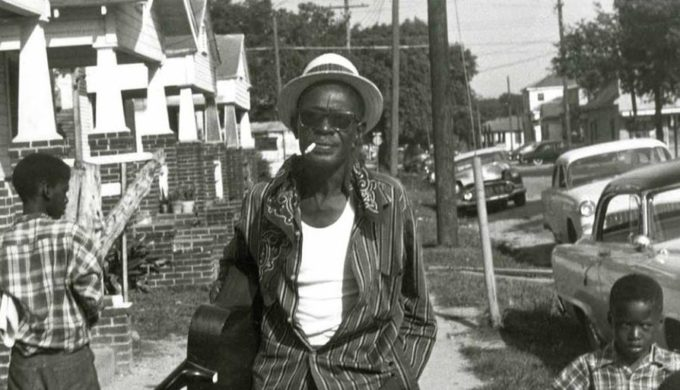
After World War II, Lightnin’ moved to Houston, where his music took on a new sound that reflected the city’s vibrant urban life. In 1946, he met producer Lola Anne Cullum, who offered him a chance to record. It was through this collaboration that he got his famous nickname. The producer decided that the duo “Smiley Hopkins” and “Lightnin’ Hopkins” would be a perfect fit.
His first recordings, made in Los Angeles, were incredibly successful. Lightnin’ quickly became one of the most prolific blues artists, recording hundreds of singles for various labels. He was remarkably productive, often writing songs on the fly and recording them in a single take. Many of his compositions were improvised stories about his life, which made his music so personal and authentic.
Unique Style and Influence
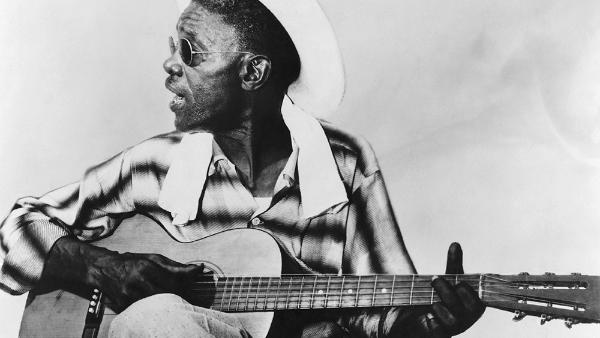
The bluesman’s style was inimitable. He was a master of fingerpicking, with his guitar and vocals always sounding like a single instrument. Key features of his music included:
- An improvisational approach. This virtuoso musician could create songs right in the studio, improvising both lyrics and music.
- A unique rhythm. His playing is often called “unpredictable” because he frequently changed the tempo, making his music feel incredibly alive.
- Deep, personal lyrics. His songs are stories from his life, telling tales of everyday struggles, poverty, love, and loneliness.
In the 1960s, thanks to a folk music revival, Lightnin’ found a new wave of popularity. He started performing at folk festivals, where he was embraced by a new, predominantly white audience. Despite this wider recognition, he never abandoned his roots. His performances remained as genuine and honest as his earliest recordings.
Legacy and Memory
The renowned musician passed away on January 30, 1982, from complications of esophageal cancer. He left behind not only an immense discography of over 100 albums but also an invaluable legacy that extends far beyond music. His work became a symbol of Texas blues and a source of inspiration for countless generations.
Hopkins’ influence can be heard in the music of countless artists. His unique style, which blended improvisation, deep lyricism, and an inimitable sense of rhythm, resonated with legends like John Lee Hooker, who adopted his playing style, and Stevie Ray Vaughan, who often cited Hopkins as one of his main idols. Musicians from various genres, from rock to folk, drew inspiration from his authenticity and mastery.
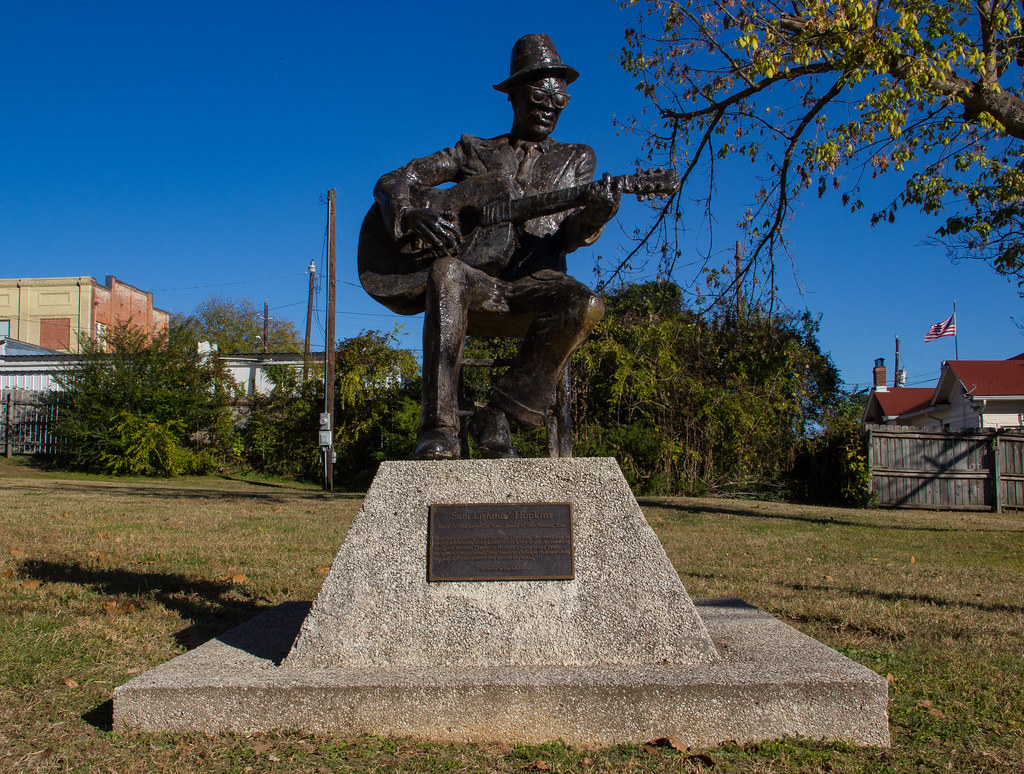
His contribution to music was recognized posthumously. In 1980, two years before his death, Hopkins was inducted into the Blues Hall of Fame. Then, in 2010, a statue of him was erected in Houston in recognition of his enduring impact on the city’s culture and world music. This monument has become a powerful symbol of respect for a man who told the stories of his life through music.
Lightnin’ Hopkins’ story is that of a simple man from Texas who, with just a guitar and his voice, was able to convey the soul of the American South to the world. His music didn’t just entertain—it was a living testament to an era, preserving the memory of a culture and a life that still resonates in the hearts of listeners today.
Key Facts from Lightnin’ Hopkins’ Life
| Date | Event | Significance |
| March 15, 1912 | Birth of Samuel Hopkins | The genesis of a future blues legend. |
| 1920s | Met Blind Lemon Jefferson | An influential stage in the formation of his musical style. |
| 1946 | Moved to Houston and made his first recordings | Received the nickname “Lightnin'” and began his professional career. |
| 1960s | Folk music revival | Gained a new wave of popularity among a wider audience. |
| January 30, 1982 | Death in Houston | The end of his life, but not the end of his influence on music. |
| 2010 | Statue erected in Houston | Posthumous recognition of his contribution to the city’s cultural heritage. |